Technical Guide 01 / AV Systems
Understanding Event Audiovisual Production & Signal Redundancy
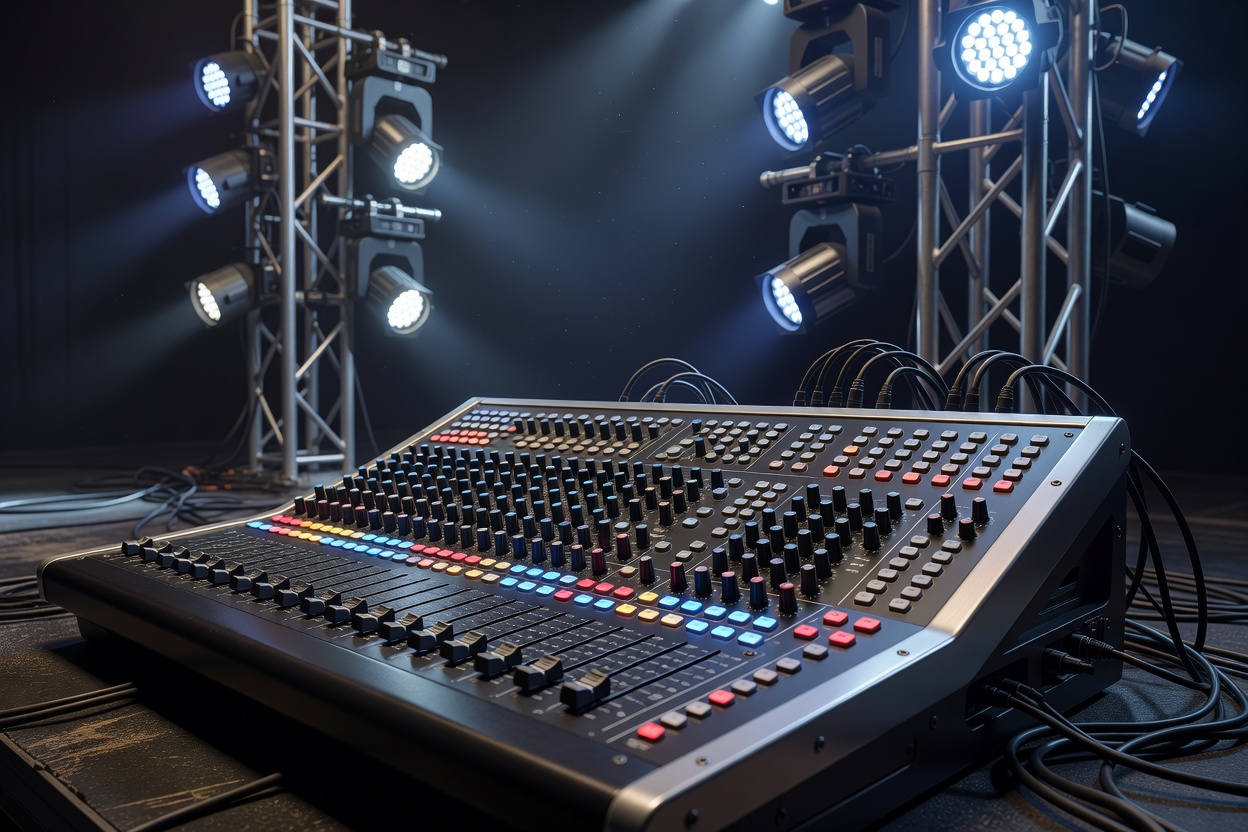
Modern enterprise live events depend on zero-latency, multi-layered signal chains. Unlike standard audio/video setups, high-stakes corporate productions require 100% hot-standby redundancy across every layer: video processing, RF wireless microphone spectrum, audio transport, and uninterruptible power supply (UPS) batteries.
The Dante Digital Audio Protocol & Dual Subnets
Using Audinate’s Dante protocol over Gigabit Ethernet allows hundreds of uncompressed 24-bit audio channels to travel over standard Cat6a cabling. To eliminate single points of failure, every FOH console runs on discrete Primary and Secondary network switches with separate power supplies. If a network line is physically severed, audio transitions to the backup line with 0ms interruption.
4K Video Vision Switching: Dual Master Systems
Main keynote presentation surfaces often exceed 4K native canvas resolutions. Systems like the Barco E2 or disguise media server clusters mirror all graphic cues across Main and Backup hardware. In the event of a graphic engine crash, the vision mixer seamlessly crossfades to the synchronized secondary engine without the audience noticing a single dropped frame.
Technical Guide 02 / Operations
How to Plan & Execute a Corporate Conference with Zero Downtime
Executing a corporate summit involving 500 to 5,000 delegates demands disciplined show-calling and minute-by-minute timeline coordination. When planning starts 6 to 12 months in advance, production directors follow strict milestone stages to ensure speakers, stage hands, and technical crew execute in lockstep.
Speaker Management & Confidence Monitoring
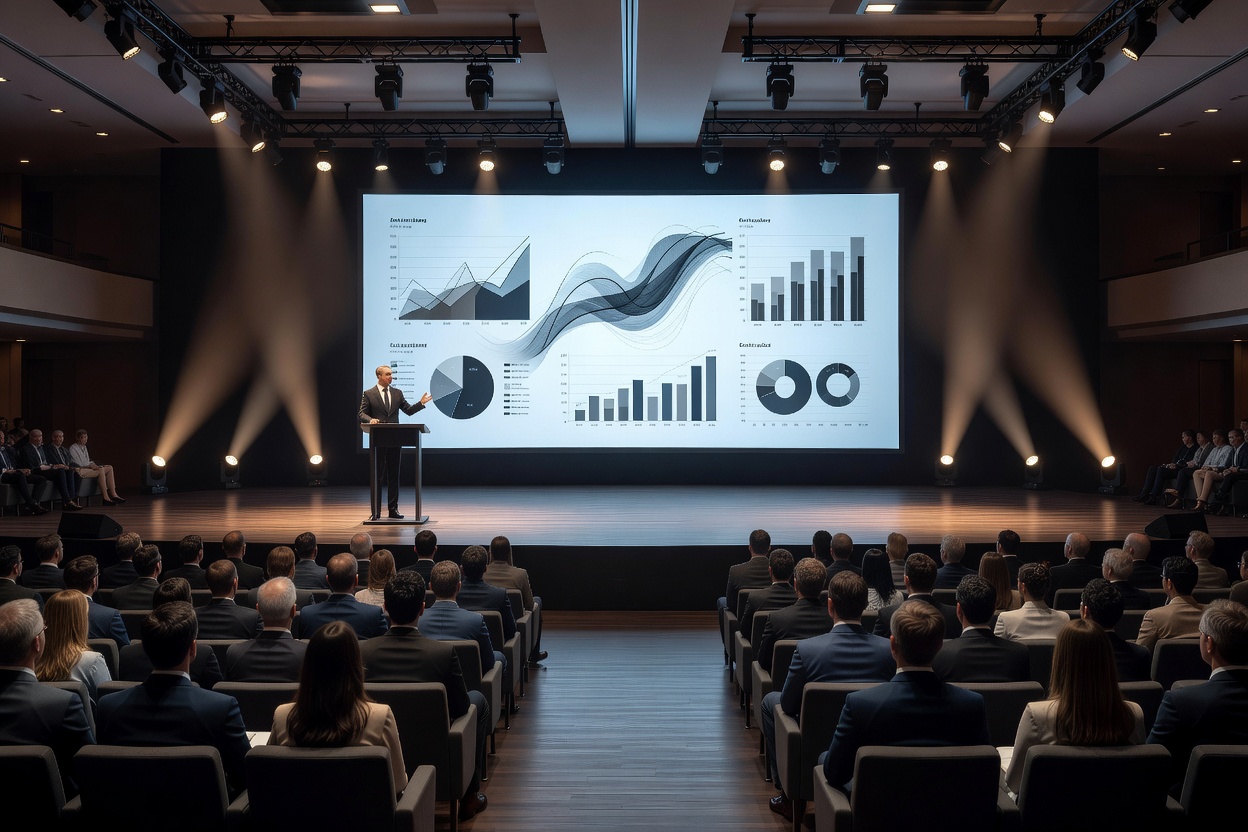
Keynote speakers should never see unexpected surprises on stage. A dedicated Speaker Ready Room receives and formats presentations at least two hours before stage call. On stage, dual 55-inch low-profile DSM (Digital Stage Monitor) screens display current slides, upcoming slide previews, speaker notes, and an active count-down timer linked to the show caller’s console.
Technical Guide 03 / Spatial
Designing Exhibition Visitor Flow & Booth Spatial Sightlines
Exhibition floor plans often suffer from dead-end alleys and congestion zones around entry portals. By modeling pedestrian traffic using radial and loop circulation frameworks, organizers can balance footfall evenly across prime and perimeter exhibition booths.
Sightline Engineering & Truss Beacons
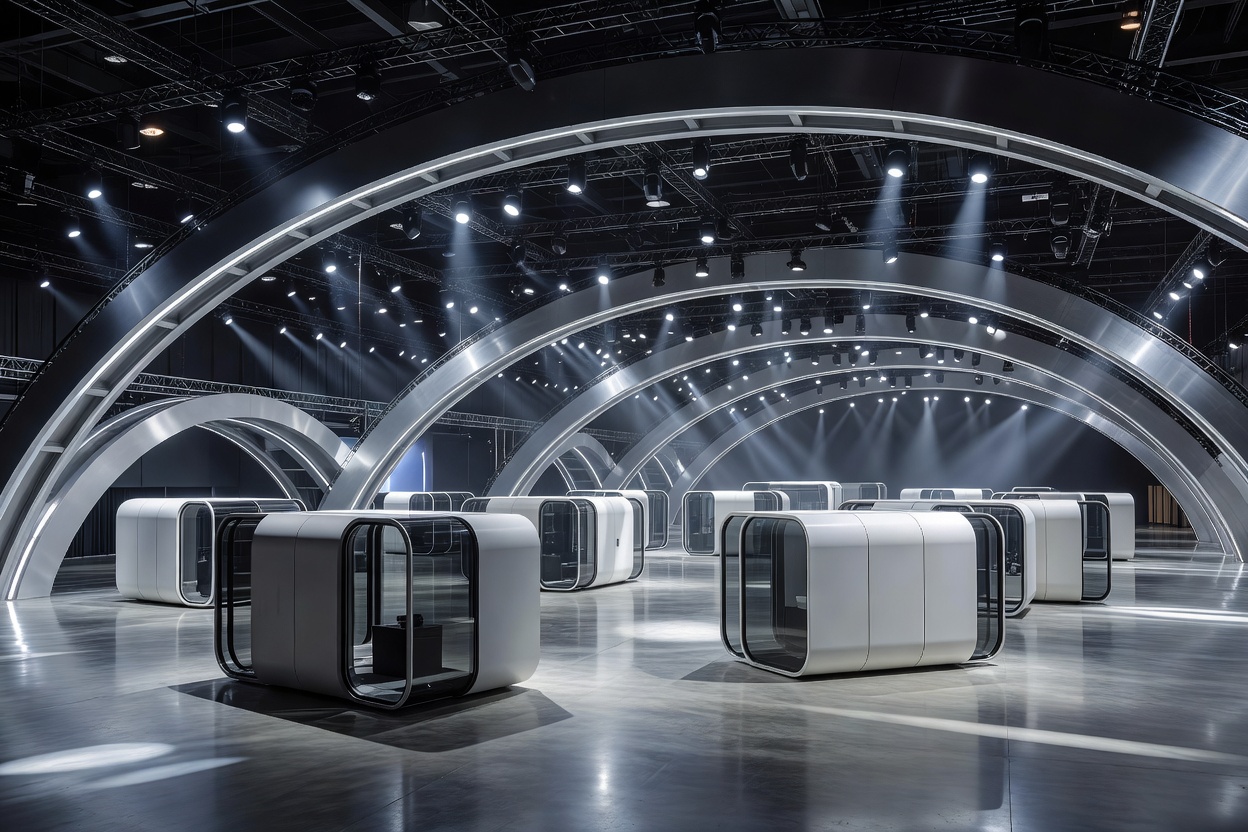
To maintain orientation in large exhibition halls, suspended 3D illuminated truss banners serve as visual landmarks. Maintaining minimum 4.5m aisle clearance ensures smooth crowd movement during peak keynote release windows.